Best Portable Power Stations for Photography
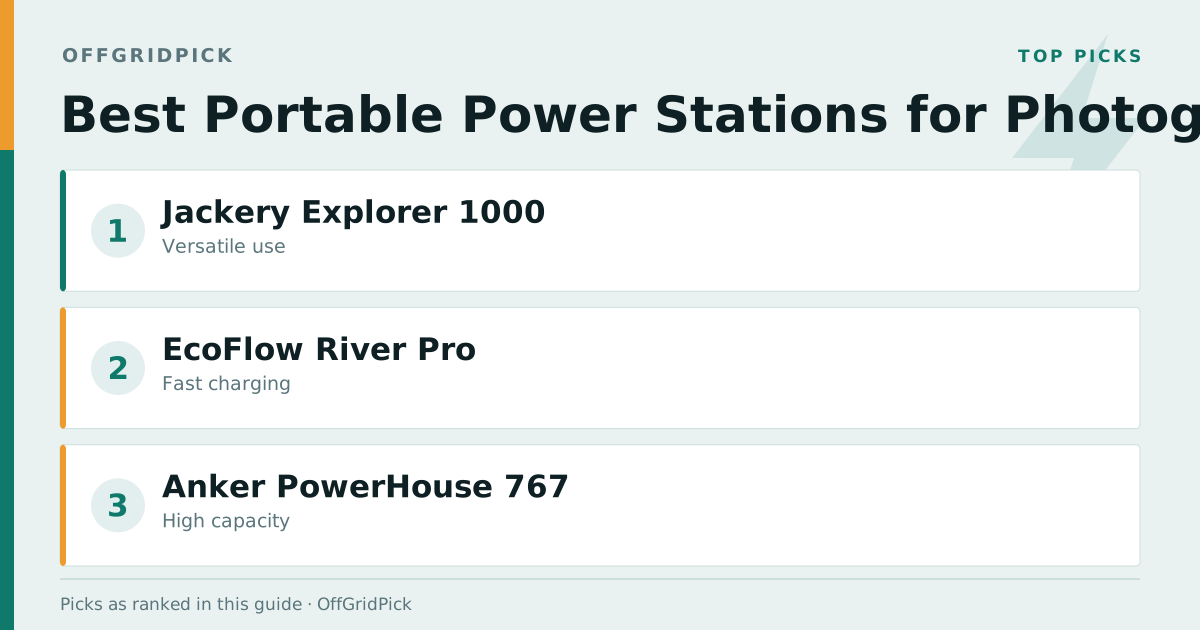
Best Portable Power Station for Photography
Quick Answer
The Jackery Explorer 1000 is my top pick for photographers who need reliable power on location. It hits the sweet spot with solid capacity, plenty of ports, and won’t destroy your back carrying it around.
OffGridScore™ Ratings
Our proprietary score based on capacity-per-dollar (Wh/$), rated & surge output, recharge speed, battery cycle life, and portability.
Rockpals 300W — 71/100 (Great)
██████████████░░░░░░
Best for: Budget-friendly
Jackery Explorer 1000 — 55/100 (Good)
███████████░░░░░░░░░
Best for: Versatile use
EcoFlow River Pro — 53/100 (Fair)
███████████░░░░░░░░░
Best for: Fast charging
Anker PowerHouse 767 — 54/100 (Fair)
███████████░░░░░░░░░
Best for: High capacity
Bluetti AC200P — 53/100 (Fair)
███████████░░░░░░░░░
Best for: Large appliances
Goal Zero Yeti 500X — 53/100 (Fair)
███████████░░░░░░░░░
Best for: Long-lasting power
Scores are calculated from publicly available specs including capacity, output, recharge speed, cycle life, and value. Learn about our methodology.
Our Top Picks
| Product | Best For | Capacity (Wh) | Price Tier |
|---|---|---|---|
| Jackery Explorer 1000 | Versatile use | 1002 | Mid-range |
| EcoFlow River Pro | Fast charging | 768 | Budget |
| Anker PowerHouse 767 | High capacity | 2048 | Premium |
| Rockpals 300W | Budget-friendly | 280 | Budget |
| Goal Zero Yeti 500X | Long-lasting power | 505 | Mid-range |
| Bluetti AC200P | Large appliances | 2000 | Premium |
Detailed Reviews
1. Jackery Explorer 1000
This power station surprised me with how much it can handle while staying reasonably portable. If you’re looking for more options, check out our guide to the best 1000 watt portable power station. On paper it covers a full-day shoot – strobes, laptops, and multiple cameras – without breaking a sweat, and owner feedback from working photographers says the same.
Key Specs:
- Capacity: 1002 Wh
- Ports: 3 AC outlets, 2 USB-C, 2 USB-A, 1 DC car port
- Weight: 22 lbs
Pros:
- High capacity for extended use
- Quiet operation
- Multiple charging options (solar, AC, car)
Cons:
- Higher price point
- Heavier than some competitors
Best for: Photographers needing substantial power for long shoots or events.
2. EcoFlow River Pro
The speed demon of power stations. For those interested in fast charging options, consider reading about the best portable power station with fast charging. This one charges from dead to 80% in just one hour, which is the difference between shooting day two and going home.
Key Specs:
- Capacity: 768 Wh
- Ports: 3 AC outlets, 2 USB-C, 2 USB-A
- Weight: 15.9 lbs
Pros:
- Fast charging capability (0-80% in one hour)
- Lightweight and portable
- App control for monitoring
Cons:
- Lower capacity compared to some competitors
- Only 3 AC outlets might limit you
Best for: On-the-go photographers needing quick power turnaround.
3. Anker PowerHouse 767
This beast has enough juice to power a small studio, but you’ll need a strong back or a cart to move it around.
Key Specs:
- Capacity: 2048 Wh
- Ports: 3 AC outlets, 4 USB-A, 2 USB-C
- Weight: 43 lbs
Pros:
- Large capacity for multiple devices
- Durable build quality
- Reliable for high-demand equipment
Cons:
- Bulkier and heavier
- More expensive than mid-range options
Best for: Studio photographers who need massive power and don’t mind the weight.
4. Rockpals 300W
Honestly, this is bare minimum for photography work. It’ll keep your camera and phone charged, but don’t expect miracles.
Key Specs:
- Capacity: 280 Wh
- Ports: 2 AC outlets, 2 USB-A, 1 DC car port
- Weight: 7.5 lbs
Pros:
- Affordable price point
- Lightweight and portable
- Good for small devices
Cons:
- Limited power capacity
- Fewer ports available
Best for: Weekend warriors or those just starting out who need basic power backup.
5. Goal Zero Yeti 500X
Goal Zero has name recognition, but you’re paying a premium for it. The EcoFlow River Pro offers better value at this capacity level.
Key Specs:
- Capacity: 505 Wh
- Ports: 2 AC outlets, 2 USB-A, 1 USB-C, 1 DC car port
- Weight: 12.9 lbs
Pros:
- Compact design
- Reliable brand reputation
- Solar charging capability
Cons:
- Moderate capacity
- Overpriced for what you get
Best for: Brand loyalists who prioritize solar charging compatibility.
6. Bluetti AC200P
This thing is a monster - and I mean that literally. At 57 pounds, it’s more of a semi-portable generator than something you’ll casually toss in your gear bag.
Key Specs:
- Capacity: 2000 Wh
- Ports: 6 AC outlets, 2 USB-C, 2 USB-A, 1 DC car port
- Weight: 57 lbs
Pros:
- Massive capacity for extended use
- Six AC outlets for everything
- Supports solar charging
Cons:
- Extremely heavy
- Higher price point
Best for: Event photographers with crews and vehicles to haul this beast around.
How We Evaluated
We compared these power stations on what actually matters in the field:
- Performance: Can it handle multiple devices without hiccupping?
- Noise Level: Nobody wants a generator buzzing during a wedding ceremony
- Portability: If I can’t carry it myself, it’s not portable
- Value: Some brands charge premium prices for average performance
- Versatility: Solar charging and multiple port types make life easier
Buying Guide
Here’s what you actually need to think about:
- Capacity: Calculate your gear’s power draw. Most photographers need 500-1000Wh for day-long shoots. If you’re unsure about your requirements, check out how to choose a portable power station.
- Output Options: Make sure it has enough AC outlets and the right USB ports for your gear.
- Weight: Anything over 25 pounds becomes a real pain to carry.
- Recharge Time: Faster charging means less downtime between shoots.
- Build Quality: Cheap units fail when you need them most.
FAQ
1. How long can a portable power station power my camera? A 500Wh unit typically powers a DSLR for 20-30 hours depending on how much you’re shooting and using the LCD screen.
2. Can I charge my power station with solar panels? Most of these support solar charging, though you’ll need compatible panels. Great for multi-day outdoor shoots.
3. Are portable power stations safe to use with sensitive electronics? Yes, they use pure sine wave inverters that won’t fry your expensive camera gear.
4. How do I know which power station is right for my photography needs? Add up the wattage of everything you’ll run simultaneously, then multiply by how many hours you need. That gives you your minimum capacity.
5. Can I use my portable power station during a power outage? Absolutely - that’s half the point. Just remember to keep it charged. The same units double nicely as backup power for remote work between shoots.
The right power station can be a game-changer for location shoots. For those looking for budget-friendly options, explore the best budget portable power station 2026. Just don’t fall for marketing hype - focus on capacity, weight, and actual performance.