Bluetti EB70S vs EcoFlow River 2 Pro
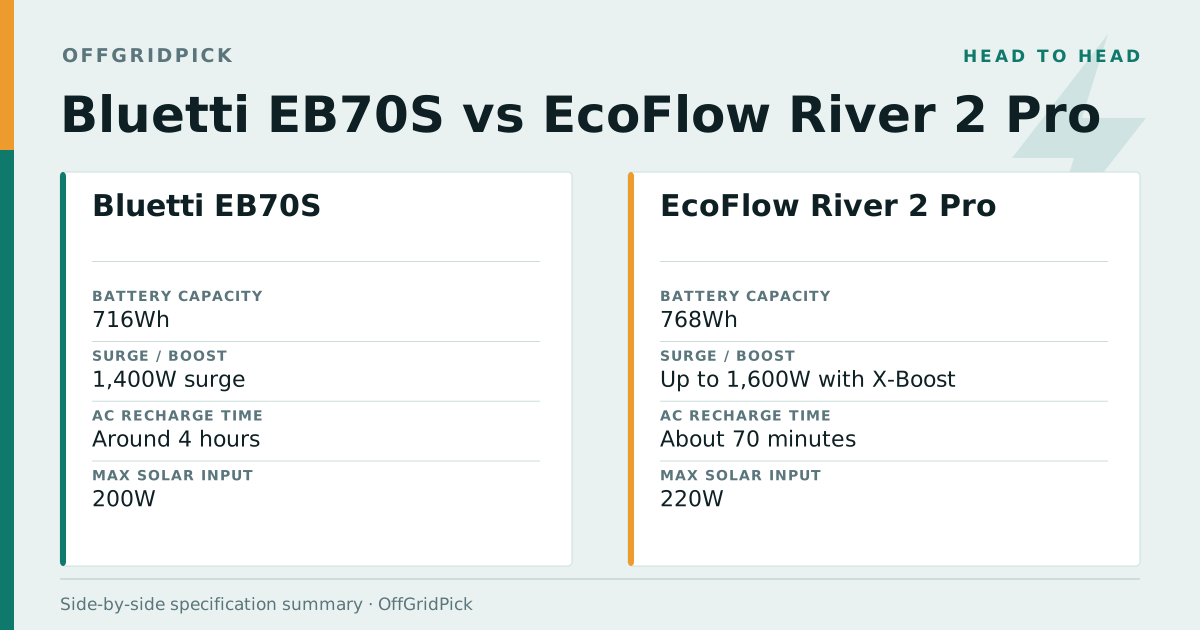
Bluetti EB70S vs EcoFlow River 2 Pro: The 700Wh-Class Showdown
The Bluetti EB70 — sold in the US as the EB70S — and the EcoFlow River 2 Pro sit in the same sweet spot: enough battery for a long weekend, enough output for real appliances, still light enough to carry one-handed. On paper they look like twins. The spec sheets tell a different story.
Quick Answer
Both the Bluetti EB70S and the EcoFlow River 2 Pro deliver 800W of AC output from a LiFePO4 battery in the 700Wh class, but the River 2 Pro wins for most people: it carries slightly more capacity (768Wh vs 716Wh), weighs several pounds less, and recharges from a wall outlet in about 70 minutes versus roughly four hours for the Bluetti. Choose the EB70S if you want more simultaneous device charging — dual 100W USB-C ports, a wireless charging pad, and four AC outlets make it the better multi-device hub.
Spec Comparison
| Feature | Bluetti EB70S | EcoFlow River 2 Pro |
|---|---|---|
| Battery Capacity | 716Wh | 768Wh |
| Battery Chemistry | LiFePO4 | LiFePO4 |
| AC Output | 800W continuous | 800W continuous |
| Surge / Boost | 1,400W surge | Up to 1,600W with X-Boost |
| AC Recharge Time | Around 4 hours | About 70 minutes |
| Max Solar Input | 200W | 220W |
| USB-C | 2 × 100W | 1 × 100W |
| Wireless Charging Pad | Yes (15W) | No |
| Weight | 21.4 lbs | 18.2 lbs |
| Rated Cycle Life | 2,500+ cycles | 3,000+ cycles |
Both are current-generation LiFePO4 designs, so either will outlast the older lithium-ion stations by years. For how EcoFlow’s smaller sibling stacks up against Bluetti’s newer compact, see our Bluetti AC70 vs EcoFlow River 2 Pro comparison.
Capacity and Output
The River 2 Pro’s 768Wh edge over the EB70S’s 716Wh is real but small — roughly one extra laptop charge per cycle. Both run the same class of loads: a 60W laptop for a full workday and then some, a 12V camping fridge overnight, CPAP machines, drone batteries, camera chargers, lights.
Output is where the fine print matters. Both are rated at 800W continuous, which covers most small kitchen gear and every USB-powered device you own. The Bluetti handles startup spikes up to 1,400W. EcoFlow’s X-Boost feature goes further on paper — up to 1,600W for resistive loads like kettles and heaters — but it works by trimming voltage, so motor-driven appliances don’t always cooperate. Treat both as honest 800W stations and you’ll never be surprised.
Recharge Speed: The Real Separator
This is the decision point for most buyers. The River 2 Pro accepts high-wattage AC input and goes from empty to full in about 70 minutes. The EB70S charges through a 200W adapter and needs around four hours for the same job.
If you charge overnight before a trip, the difference is academic. If you’re the person who remembers the power station an hour before leaving — or who wants to top up from a generator or campground pedestal quickly — the EcoFlow’s charging system changes how you use the thing. Fast-charging is a category of its own at this point; our fast-charging power station roundup ranks the quickest options across every size class.
Solar is close to a wash: 200W max input on the Bluetti, 220W on the EcoFlow. With a properly angled panel in good sun, both refill over a midday stretch. Panel pairing matters more than the 20W gap — our guide to the best solar panels for Bluetti and our EcoFlow panel guide cover matching options for each.
Ports and Everyday Use
The EB70S is quietly one of the best multi-device hubs in this class. Dual 100W USB-C ports mean two laptops fast-charging at once — something the River 2 Pro, with its single 100W USB-C, can’t match. Add four AC outlets, USB-A ports, a 12V car socket, and a 15W wireless pad on top, and the Bluetti reads like it was designed for a family’s worth of electronics.
The River 2 Pro counters with a sharper display, app control over Wi-Fi and Bluetooth, and a lighter, slimmer body that’s easier to wedge behind a van seat. At 18.2 lbs versus 21.4 lbs, the EcoFlow is the one you’ll grab more willingly.
You can check current availability for both here: Bluetti EB70S and EcoFlow River 2 Pro.
Who Should Buy Which?
Choose the EcoFlow River 2 Pro if:
- Fast AC recharging would actually change how you use a power station
- You want the lighter unit for frequent carrying
- App monitoring and a longer cycle rating appeal to you
Choose the Bluetti EB70S if:
- You regularly charge two USB-C laptops or several devices at once
- The wireless charging pad and extra AC outlets fit your setup
- You mostly charge overnight, where the slower AC input costs you nothing
Both sit in the mid tier for compact stations, so the decision is genuinely about features rather than budget. If you’re still deciding between these two brands across their whole lineups, our EcoFlow vs Bluetti guide zooms out.
FAQ
1. Is the Bluetti EB70 the same as the EB70S? Effectively yes for US shoppers — the EB70S is the version sold in North America, with an 800W inverter. When people search “EB70,” the EB70S is almost always the unit they’ll actually find.
2. Can either one run a refrigerator? A compact or camping fridge, yes — both handle typical 12V and small AC fridges easily. Full-size home refrigerators have startup surges that can exceed what this class manages; see our guide on powering a refrigerator for the sizing math.
3. How long do these batteries last? Both use LiFePO4 chemistry: the EB70S is rated for 2,500+ cycles and the River 2 Pro for 3,000+ cycles before dropping to 80% capacity. Either way, that’s years of heavy use.
4. Which charges faster from solar? They’re nearly identical — 200W max input on the Bluetti, 220W on the EcoFlow. Real-world solar speed depends far more on panel quality and sun angle than on this spec.
5. Do both support pass-through charging? Yes. Both can power devices while recharging, which makes either a workable small UPS for a router or CPAP setup.
Conclusion
The River 2 Pro is the better all-rounder — more capacity, less weight, dramatically faster charging, longer cycle rating. It’s the one to get if you’re picking blind. But the EB70S isn’t the loser here; it’s the specialist. Dual 100W USB-C ports and a deep bench of outlets make it the stronger pick for anyone whose real use case is “charge everything my household owns at once.” Decide which problem you actually have, and the winner picks itself. Still comparing across the whole compact class? Our camping power station guide lines up the field.