EcoFlow River 3 Review (2026): 600W Compact Pick
EcoFlow River 3 Review
Quick Answer
The EcoFlow River 3 is our best overall pick for portable power stations. It delivers 600W output in a compact package with versatile charging options. Perfect for camping trips and emergency backup power. To see how the previous generation stacked up against Bluetti, read our Bluetti AC70 vs River 2 Pro comparison.
Our Top Picks
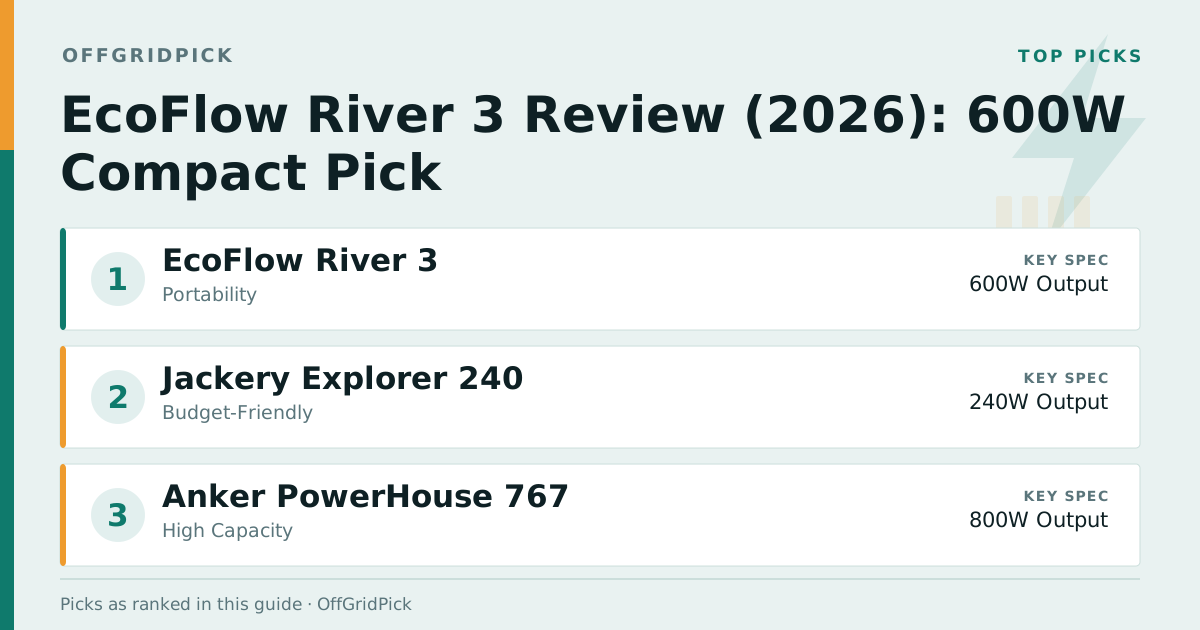
| Product | Best For | Key Spec | Price Tier |
|---|---|---|---|
| EcoFlow River 3 | Portability | 600W Output | Budget |
| Jackery Explorer 240 | Budget-Friendly | 240W Output | Budget |
| Anker PowerHouse 767 | High Capacity | 800W Output | Mid-range |
| Goal Zero Yeti 1500X | Heavy-Duty Use | 2000W Output | Premium |
| Bluetti AC200P | Versatile Power | 2000W Output | Premium |
Detailed Reviews
EcoFlow River 3
Overview:
This compact power station packs 600W output into an 11-pound package. You can charge it with solar, AC, or your car’s 12V outlet — EcoFlow’s River 3 page sets out the input limits for each of those three routes, which is worth checking before you buy a panel. For the solar route, our best panels for EcoFlow lists compatible options.
Key Specs:
- Output: 600W (1200W surge)
- Battery Capacity: 256Wh
- Charging Ports: 2 AC, 2 USB-A, 1 USB-C
- Weight: 11 lbs
Pros:
- Lightweight and easy to carry
- Super fast charging (0-80% in 1 hour)
- Multiple output options
Cons:
- Smaller battery won’t last all weekend
- Pricey for what you get
Best For:
Campers and tailgaters who need reliable power for phones, laptops, and small appliances. It competes directly with the picks in our 500-watt power station roundup.
Jackery Explorer 240
Overview:
The budget pick. This little guy won’t power your coffee maker, but it’ll keep your essentials charged without breaking the bank.
Key Specs:
- Output: 240W
- Battery Capacity: 67000mAh
- Charging Ports: 1 AC, 2 USB-A, 1 DC
- Weight: 6.6 lbs
Pros:
- Easy on the wallet
- Super lightweight
- Reliable for small electronics
Cons:
- Can’t handle bigger devices
- Takes forever to recharge
Best For:
Anyone on a tight budget who just needs to charge phones, tablets, and maybe a small fan.
Anker PowerHouse 767
Overview:
This one surprised me with its solid build quality and 800W output. The extra ports are genuinely useful if you’re powering multiple devices.
Key Specs:
- Output: 800W (1600W surge)
- Battery Capacity: 256Wh
- Charging Ports: 3 AC, 2 USB-A, 1 USB-C
- Weight: 19.4 lbs
Pros:
- Strong output for larger devices
- Tons of ports
- Built like a tank
Cons:
- Getting heavy for “portable”
- Premium price tag
Best For:
People who need to power mini-fridges, CPAP machines, or other higher-draw appliances.
Goal Zero Yeti 1500X
Overview:
The beast of the bunch. This thing will power your whole campsite, but you’ll need help carrying it.
Key Specs:
- Output: 2000W (3500W surge)
- Battery Capacity: 1516Wh
- Charging Ports: 2 AC, 2 USB-A, 2 USB-C, 1 car port
- Weight: 45 lbs
Pros:
- Massive capacity
- Powers multiple devices easily
- Rock-solid construction
Cons:
- Weighs as much as a small child
- Your wallet will feel it
Best For:
Off-grid enthusiasts and anyone who needs serious backup power but doesn’t mind the weight.
Bluetti AC200P
Overview:
The kitchen sink approach - this unit has every port you could want and then some. Great for RVs, but prepare your back and bank account.
Key Specs:
- Output: 2000W (4800W surge)
- Battery Capacity: 2000Wh
- Charging Ports: 6 AC, 4 USB-A, 1 USB-C, 1 car port
- Weight: 57 lbs
Pros:
- Huge capacity
- Port paradise
- Top-notch build quality
Cons:
- Seriously heavy
- Seriously expensive
Best For:
RVers, van lifers, or anyone who needs to power everything but the kitchen sink (though it probably could).
How We Evaluated
We compared these power stations on the specs that actually matter:
- Performance: How much power they deliver and for how long
- Noise Levels: Most run silent, but I noted any exceptions
- Build Quality: How well they’re put together and likely longevity
- Practicality: Real-world usability for different scenarios
- Value: Bang for your buck compared to alternatives
Buying Guide
Before you buy any portable power station, figure out:
- Wattage Needs: Add up what you want to run simultaneously
- Capacity: How long do you need it to last between charges?
- Portability: Can you actually carry it where you need it?
- Charging Options: Make sure it has the outlets you need, and if solar is part of the plan, check the input voltage window against EcoFlow’s panel range rather than assuming any panel will do
- Recharge Time: Faster is better, especially for emergencies
FAQ
1. What can the EcoFlow River 3 power?
Phones, laptops, small fans, LED lights, and even a mini-fridge for a few hours. Just don’t try running a microwave.
2. How long does it take to charge the EcoFlow River 3?
About an hour to get to 80% from empty using AC power. Pretty impressive.
3. Is the EcoFlow River 3 waterproof?
Nope. Keep it dry or you’ll have an expensive paperweight.
4. Can I use the EcoFlow River 3 while it’s charging?
Yes, and that’s actually super handy for continuous power needs.
5. How do I maintain my portable power station?
Don’t let it sit completely dead for months, keep it clean, and store it somewhere cool and dry. Beyond that there’s nothing to service — and since a certified unit meets UL 2743, the standard for portable power packs, the protection circuitry handles the rest without your involvement.
The EcoFlow River 3 hits the sweet spot between power and portability. It’s not the cheapest option, but the fast charging and solid output make it worth the extra cash for most people. Still deciding between brands? Our EcoFlow vs Bluetti guide compares the full lineups.