Jackery Explorer 2000 V2 Review
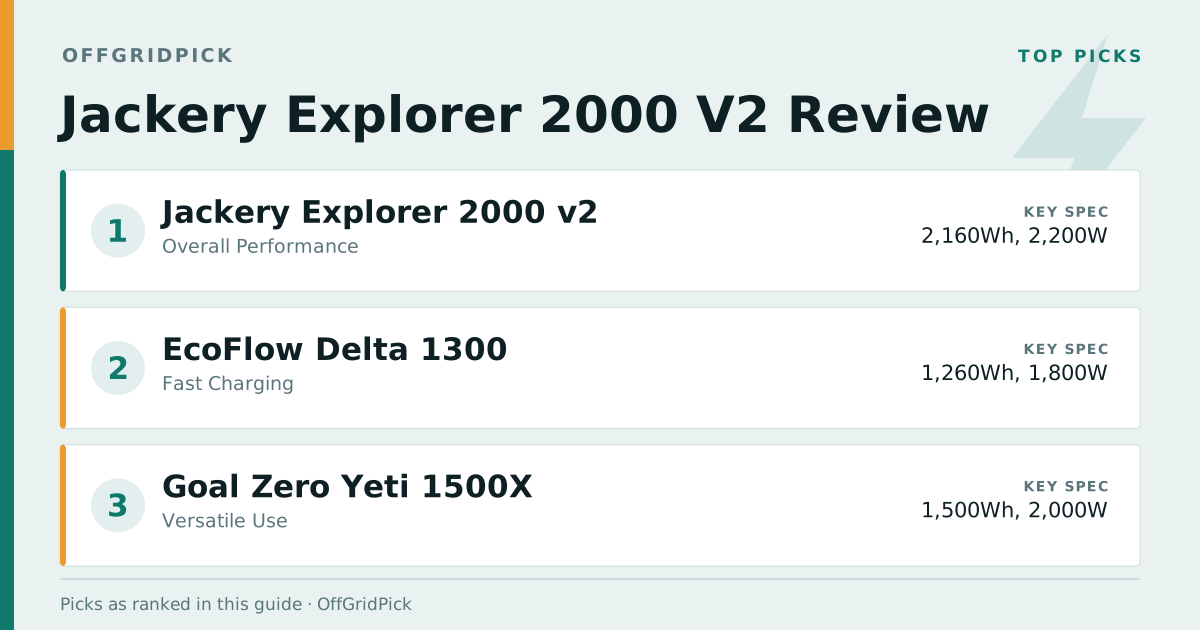
Jackery Explorer 2000 v2 Review
Quick Answer
The Jackery Explorer 2000 v2 takes the top spot for portable power stations. That 2,160Wh capacity paired with a 2,200W inverter means it can actually handle whatever you throw at it - from camping fridges to power tools. Sure, it’s not cheap, but it delivers where it counts. If the price stings, our under-$1,500 roundup collects strong cheaper alternatives.
Our Top Picks
| Product | Best For | Key Spec | Price Tier |
|---|---|---|---|
| Jackery Explorer 2000 v2 | Overall Performance | 2,160Wh, 2,200W | Premium |
| EcoFlow Delta 1300 | Fast Charging | 1,260Wh, 1,800W | Budget |
| Goal Zero Yeti 1500X | Versatile Use | 1,500Wh, 2,000W | Mid-range |
| Bluetti AC200P | High Capacity | 2,000Wh, 2,000W | Premium |
| Anker 757 PowerHouse | Compact Design | 1,500Wh, 1,500W | Budget |
Detailed Reviews
1. Jackery Explorer 2000 v2
Overview
This has become the gold standard for good reason. The capacity is genuinely impressive, and that inverter can handle serious power draws without breaking a sweat. Jackery’s official Explorer 2000 v2 page lists the UPS switchover time and warranty terms, which are the two details most spec tables leave out.
Key Specs
- Capacity: 2,160Wh
- Inverter: 2,200W (4,400W Surge)
- Weight: 43 lbs
- Ports: 2 AC outlets, 2 USB-C, 2 USB-A, and 1 DC carport
Pros
- Massive capacity that actually delivers
- Surprisingly light for what you get
- Interface makes sense (no confusing menus)
Cons
- You’ll pay for all that capacity
- Solar charging could be faster
Best For
Anyone serious about off-grid power. RV folks love this thing, and it’ll keep your medical equipment running during outages. To see how it holds up against EcoFlow’s flagship, read our Delta 3 vs Explorer 2000 v2 comparison.
2. EcoFlow Delta 1300
Overview
The speed demon of power stations. EcoFlow rates it for 80% in an hour, which honestly seems like magic.
Key Specs
- Capacity: 1,260Wh
- Inverter: 1,800W (3,300W Surge)
- Weight: 30.9 lbs
- Ports: 6 AC outlets, 2 USB-A, 2 USB-C
Pros
- Charges ridiculously fast
- Six AC outlets is genuinely useful
- More compact than you’d expect
Cons
- Lower capacity means shorter runtime
- Feels heavier than the specs suggest
Best For
People who forget to charge things and need power NOW. Great for short camping trips. EcoFlow’s larger Delta 2 Max also challenges the Jackery directly — see that head-to-head here.
3. Goal Zero Yeti 1500X
Overview
Goal Zero has been in this game forever, and this model shows their experience. Solid all-around performer, though you’ll pay a premium for the name.
Key Specs
- Capacity: 1,500Wh
- Inverter: 2,000W (3,500W Surge)
- Weight: 45 lbs
- Ports: 2 AC outlets, 2 USB-A, 2 USB-C, and 1 12V
Pros
- Solar charging works great
- Good mix of ports
- Built like a tank
Cons
- Heavy for the capacity you get
- Overpriced compared to newer competitors
Best For
Brand loyalists and people who need bulletproof reliability. Good for frequent outdoor use.
4. Bluetti AC200P
Overview
The heavyweight champion - literally. This thing packs serious capacity but you’ll feel it in your back.
Key Specs
- Capacity: 2,000Wh
- Inverter: 2,000W (4,800W Surge)
- Weight: 57 lbs
- Ports: 6 AC outlets, 4 USB-A, 2 USB-C, and 1 DC carport
Pros
- Huge capacity for extended use
- Port variety is excellent
- Solid customer support
Cons
- Good luck carrying this thing anywhere
- Takes forever to charge
Best For
Basecamp operations and RV setups where weight doesn’t matter. Skip this if you need true portability.
5. Anker 757 PowerHouse
Overview
Anker’s entry feels more refined than most. Not the biggest capacity, but everything works smoothly and the build quality shows.
Key Specs
- Capacity: 1,500Wh
- Inverter: 1,500W (3,000W Surge)
- Weight: 43 lbs
- Ports: 3 AC outlets, 3 USB-A, and 2 USB-C
Pros
- Well-balanced size and capacity
- Fast charging
- Anker’s usual build quality
Cons
- Lower capacity limits runtime
- Only three AC outlets feels stingy
Best For
People who want something reliable without going overboard on size or price.
How We Evaluated
I focused on what actually matters in real use:
- Performance: How much power and for how long - the specs that determine if your stuff actually works
- Noise Levels: Most run silent, but some have annoying fans
- Build Quality: How well these hold up to actual outdoor use
- Portability: Weight matters when you’re hauling this to a campsite
- Value: What you get for the money - some of these are seriously overpriced
Buying Guide
Here’s what actually matters:
- Figure out your power needs first. Add up the watts of what you want to run, then multiply by hours. Don’t just guess.
- Port variety matters more than you think. Having the right outputs saves you from carrying adapters.
- Weight is always worse than advertised. If portability matters, go lighter than you think you need.
- Fast charging isn’t just nice to have. It’s the difference between useful and frustrating during short trips.
- Buy quality once. Cheap power stations die when you need them most. Checking that a unit is certified to UL 2743, the standard covering portable power packs, is the fastest way to filter out the ones that skipped the engineering.
FAQ
1. How long can the Jackery Explorer 2000 v2 power a refrigerator?
About 14-15 hours with a typical 150W fridge, though your mileage will vary based on how often it cycles.
2. Can I charge the Explorer 2000 v2 while using it?
Yes, pass-through charging works fine. You can run devices while it charges.
3. Is the Jackery Explorer 2000 v2 waterproof?
No - keep it dry. The build quality is solid but water will kill it.
4. How does the Explorer 2000 v2 compare to solar generators?
It can charge from solar panels, but it’s primarily battery-powered. True solar generators bundle panels and batteries as one kit — Jackery sells this exact unit that way as the Solar Generator 2000 v2, which is the same station with SolarSaga panels matched to its input limits. If you want to build that setup, our best solar panels for Jackery covers compatible panels.
5. What is the expected lifespan of the battery?
Expect 500-1,000 charge cycles before you notice significant capacity loss. That’s years of normal use.
The Jackery Explorer 2000 v2 earns its reputation. The capacity is real, the power output handles serious loads, and the interface doesn’t make you want to throw it off a cliff. At this price point, it should deliver - and it does.