Anker Solix C1000 Gen 2 Review (2026)
Anker Solix C1000 Gen 2 Review: A Compact 1kWh Workhorse
Quick Answer
The Anker Solix C1000 Gen 2 takes the top spot here thanks to its LiFePO4 battery, a genuinely fast recharge, and a 1,800W output that punches above its 1,056Wh size. It handles most camping and backup loads without breaking a sweat, though you’ll pay a bit more than bargain-bin units for that build quality.
Our Top Picks
| Product | Best For | Key Spec | Price Tier |
|---|---|---|---|
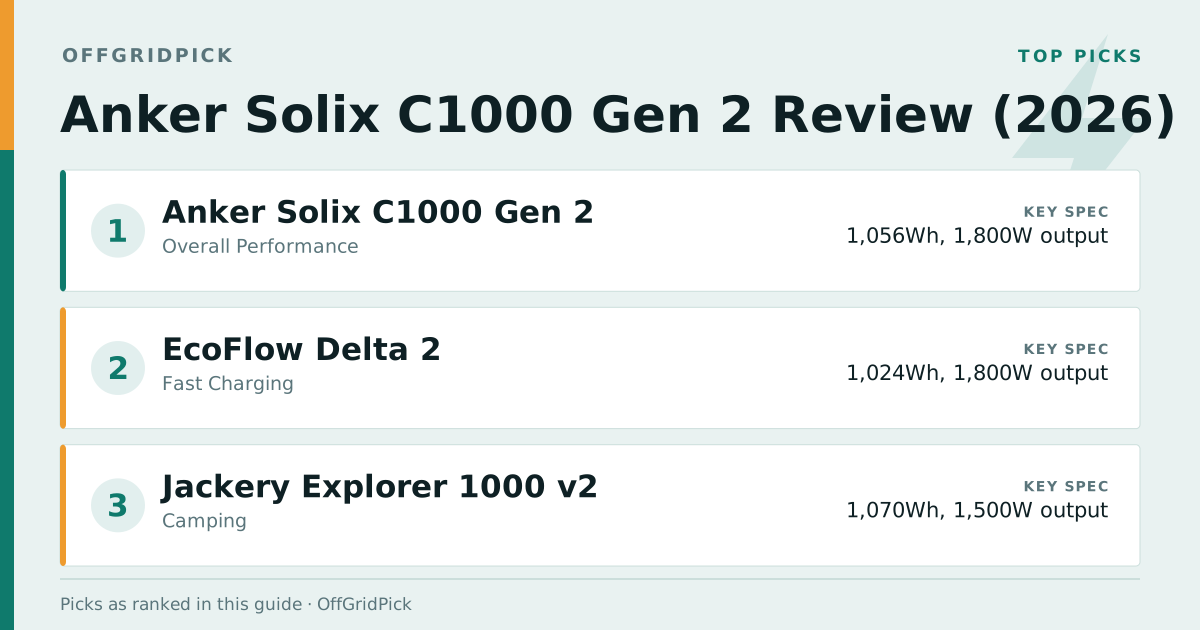
| Anker Solix C1000 Gen 2 | Overall Performance | 1,056Wh, 1,800W output | Mid-range |
| EcoFlow Delta 2 | Fast Charging | 1,024Wh, 1,800W output | Mid-range |
| Jackery Explorer 1000 v2 | Camping | 1,070Wh, 1,500W output | Mid-range |
| Bluetti AC180 | Value | 1,152Wh, 1,800W output | Budget |
| Anker 757 PowerHouse | Durability | 1,229Wh, 1,500W output | Premium |
Detailed Reviews
1. Anker Solix C1000 Gen 2
Overview:
This one surprised me with how well it balances power and recharge speed. The sleek design doesn’t hurt either, especially if you’re tired of gear that looks like industrial equipment. Anker’s C1000 product page carries the full port list and charging figures, which is worth cross-checking because Gen 1 and Gen 2 listings sit side by side at retail. For more on how it stacks up, check out our comparison of Jackery and Anker Solix.
Key Specs:
- Capacity: 1,056Wh (LiFePO4)
- Output: 1,800W (2,400W surge via SurgePad)
- Ports: 2 AC outlets, 2 USB-C, 2 USB-A, 1 car port
- Price Tier: Mid-range
Pros:
- Fast AC recharge (roughly 0-100% in under an hour)
- LiFePO4 cells rated for 3,000+ cycles
- Runs quietly enough for indoor use
Cons:
- You’re paying a bit extra for the brand and build
Best For Whom:
Perfect if you want solid output with long battery life and don’t mind spending a little more for it.
2. EcoFlow Delta 2
Overview:
The speed champion. If you’re impatient about charging, the Delta 2’s near-identical capacity recharges blisteringly fast, and it offers more AC outlets than the Anker. We break down that head-to-head in our Anker Solix C1000 vs EcoFlow Delta 2 comparison.
Key Specs:
- Capacity: 1,024Wh (LiFePO4)
- Output: 1,800W (2,700W surge)
- Ports: 6 AC outlets, 2 USB-A, 2 USB-C, 1 car port
- Price Tier: Mid-range
Pros:
- Extremely fast charging
- Six AC outlets for running several devices at once
- Expandable with add-on batteries
Cons:
- App can be fiddly to set up
Best For Whom:
Ideal for anyone who hates waiting on a recharge or needs lots of outlets.
3. Jackery Explorer 1000 v2
Overview:
Jackery has quietly dominated the camping space for years, and this update keeps that streak going. Lightweight, simple, and dependable for trips where you just need reliable power.
Key Specs:
- Capacity: 1,070Wh (LiFePO4)
- Output: 1,500W (3,000W surge)
- Ports: 3 AC outlets, 2 USB-C, 1 USB-A, 1 car port
- Price Tier: Mid-range
Pros:
- One of the lighter 1kWh units around
- Dead simple to operate
- Quiet operation
Cons:
- Lower continuous output than the Anker or EcoFlow
Best For Whom:
Great choice for campers and weekenders who value portability. If you’re looking for more options, see our guide on the best portable power station for home backup.
4. Bluetti AC180
Overview:
The value play in this group. You get more capacity than the Anker for less money, and the same 1,800W output, though the build feels a notch less premium.
Key Specs:
- Capacity: 1,152Wh (LiFePO4)
- Output: 1,800W (2,700W surge)
- Ports: 4 AC outlets, 1 USB-C, 4 USB-A, 1 car port
- Price Tier: Budget
Pros:
- Most capacity-per-dollar on this list
- Fast AC recharge
- Plenty of USB ports
Cons:
- Fan can get noticeable under heavy load
Best For Whom:
Worth it if you want maximum watt-hours for your money and don’t mind a slightly less polished package. If you’re torn between these two brands more broadly, our Bluetti vs Anker comparison digs into the full lineups.
5. Anker 757 PowerHouse
Overview:
The tank of the bunch. It’s heavier and pricier, but Anker’s older flagship is built to last and offers the most capacity here.
Key Specs:
- Capacity: 1,229Wh (LiFePO4)
- Output: 1,500W (2,400W surge)
- Ports: 3 AC outlets, 3 USB-A, 2 USB-C, 1 car port
- Price Tier: Premium
Pros:
- Largest capacity in this comparison
- Rugged, durable design
- Long cycle life
Cons:
- Heaviest and most expensive option
Best For Whom:
Perfect for home backup or base-camp use where capacity and durability matter more than weight.
How We Evaluated
I focused on what actually matters in daily use:
- Capacity-per-Dollar: Watt-hours you get for every dollar spent
- Output and Surge: Rated wattage plus how it handles startup spikes from motors and tools
- Recharge Speed: How fast it tops back up from AC, car, or solar
- Cycle Life: How many charge cycles before the battery noticeably degrades
- Portability: Weight and form factor for hauling it to the campsite
Buying Guide
Here’s what actually matters when shopping:
- Capacity (Wh): Add up the watt-hours your devices need over a trip, then leave some headroom.
- Continuous vs. Surge Output: Check both. A fridge or pump draws far more at startup than it does running.
- Battery Chemistry: LiFePO4 lasts far longer than older lithium-ion and is the standard worth holding out for.
- Recharge Options: Wall charging is fastest; solar and car charging matter for off-grid use.
- Weight: A 1kWh unit usually lands around 25-30 lbs. Make sure you can actually carry it.
FAQ
1. How long does the Anker Solix C1000 Gen 2 take to recharge?
From a wall outlet, it reaches a full charge in roughly an hour, which is one of its standout features.
2. What can a 1,056Wh power station actually run?
A 60W laptop for around 15 hours, a 100W mini-fridge for most of a day, or short bursts of higher-draw appliances thanks to the 1,800W output.
3. Can I charge it with solar panels?
Yes, it accepts solar input, making it a solid base for an off-grid or camping setup. Size the array with some slack — the Department of Energy’s notes on solar performance and efficiency explain how much heat and off-angle sun take out of a panel’s rated wattage.
4. How long will the battery last?
The LiFePO4 cells are rated for 3,000+ charge cycles to 80% capacity, so years of regular use before any meaningful degradation.
5. Is it safe to use indoors?
Absolutely. Unlike gas generators, it produces no combustion exhaust, so it’s fine to run inside during an outage — the EPA’s guidance on carbon monoxide in indoor air is a good reminder of why that distinction is the whole reason batteries replaced generators for indoor backup.
The Anker Solix C1000 Gen 2 hits the sweet spot of output and recharge speed without going overboard on price. For those on a budget, check out our review of the best budget portable power station. Unless you have specific needs (like maximum capacity or the lowest possible price), it’s hard to go wrong here.