Jackery Vs Anker Solix Comparison
Jackery vs. Anker Solix Comparison
Quick Verdict
Jackery power stations are built for outdoor adventures—think camping trips and tailgate parties. The Anker Solix series is more about smart home integration and tech features. Need something rugged for the great outdoors? Go Jackery. Want efficiency and app control for home backup? Anker Solix wins. For the small end of both lineups, our Jackery 300 Plus vs Anker 521 comparison covers the compact class.
At a Glance
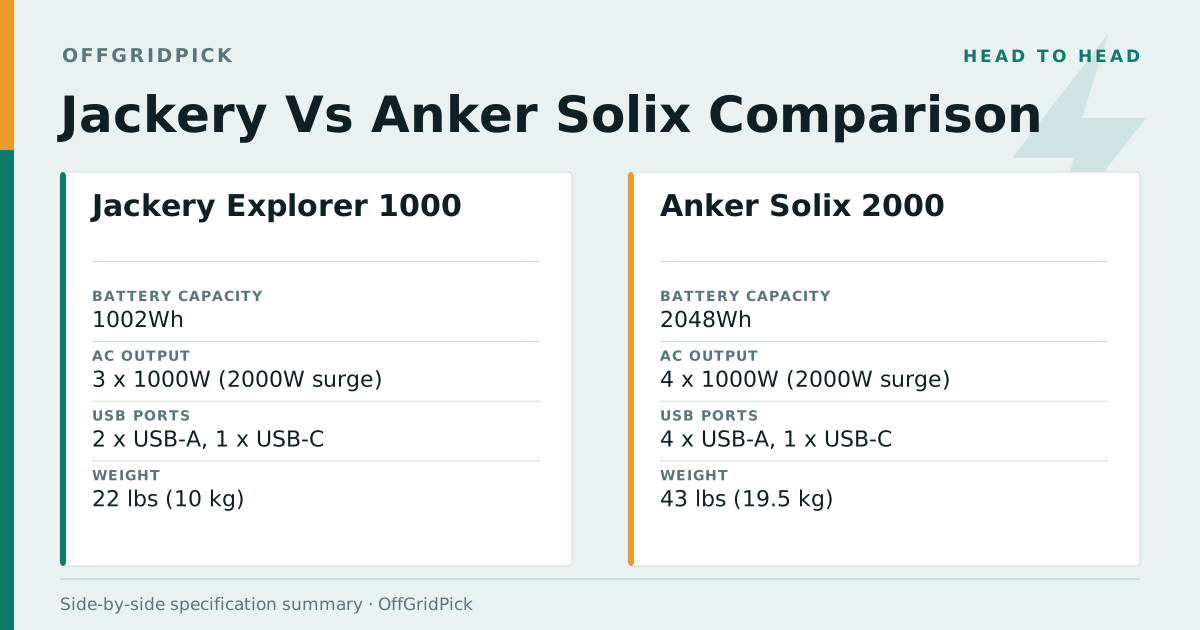
| Feature | Jackery Explorer 1000 | Anker Solix 2000 |
|---|---|---|
| Battery Capacity | 1002Wh | 2048Wh |
| AC Output | 3 x 1000W (2000W surge) | 4 x 1000W (2000W surge) |
| USB Ports | 2 x USB-A, 1 x USB-C | 4 x USB-A, 1 x USB-C |
| Weight | 22 lbs (10 kg) | 43 lbs (19.5 kg) |
| Dimensions | 13.1 x 9.2 x 11.1 inches | 15.7 x 10.8 x 11.4 inches |
| Price Tier | Mid-range | Premium |
| Warranty | 2 years | 18 months |
| Smart Features | None | Yes (via app) |
| Solar Input | Yes, 200W | Yes, 400W |
Design & Build Quality
The Jackery Explorer 1000 feels like a tank—in a good way. At 22 lbs, it’s hefty enough to feel substantial but light enough to haul to your campsite without throwing out your back. The plastic casing looks bulletproof, and that handle actually feels comfortable after lugging it around.
The Anker Solix 2000 went for the sleek, modern look. It’s a beauty, but at 43 lbs, you’re not casually tossing this in your trunk for a weekend trip. The port layout is thoughtful—everything’s where you’d expect it to be, and Anker’s SOLIX range page shows how consistent that layout has stayed across the newer models. Both are well-built, but the Jackery clearly wins if you’re planning to move it around regularly.
Performance
Here’s where the rubber meets the road. The Jackery’s 1002Wh will keep your mini-fridge humming and your laptop charged for a solid weekend camping trip. Its 1000W continuous rating leaves real headroom for running several devices at once—it’s reliable when you need it most.
The Anker’s 2048Wh capacity is genuinely impressive. Nearly double the juice means it can handle power-hungry stuff like CPAP machines or small power tools. This one surprised me with how well it handled sustained heavy loads without breaking a sweat. Anker’s mid-size C1000 also puts up a strong fight against EcoFlow — see our Anker C1000 vs Delta 2 comparison.
Inverter Noise & Fan Behavior
Both run pretty quietly, but the Anker edges ahead here. The Jackery’s cooling fan can get a bit chatty under heavy load—not terrible, but noticeable if you’re trying to sleep in a quiet tent. Anker’s thermal management is genuinely better; it stays whisper-quiet even when pushing hard.
Battery Care & Longevity
Good news: neither needs ongoing maintenance costs. No filters to replace, no parts to swap out. Just charge and go. The Anker occasionally prompts for software updates through its app, which is actually kind of nice—it keeps getting smarter over time.
Smart Features
This is where these two really diverge. The Anker Solix’s app integration is legitimately useful—you can monitor power draw, get low-battery alerts, and even control some functions remotely. Perfect if you’re into the whole smart home thing.
The Jackery? Zero smart features. It’s refreshingly simple: plug stuff in, it works. Some people will love this no-nonsense approach, others might find it dated in 2024.
Price & Value
The Jackery hits that sweet spot for outdoor enthusiasts. You’re paying for proven reliability and portability—both things that matter when you’re miles from the nearest outlet.
The Anker costs meaningfully more, but you’re getting double the capacity plus those smart features. The math works if you need the extra power, but it’s harder to justify if you’re just powering basic camping gear.
Who Should Buy Which?
Go with Jackery Explorer 1000 if:
- You’re hauling it camping, tailgating, or to job sites
- Simple plug-and-play is your preference
- Budget matters and 1000Wh covers your needs
- It’s staying put for home backup power
- You want app control and monitoring
- You need serious capacity for larger appliances
FAQ
1. Can both units be charged with solar panels? Yes, both work with solar panels. The Anker handles up to 400W solar input versus Jackery’s 200W max — Jackery’s SolarSaga range shows which panel combinations reach that 200W ceiling without exceeding the voltage window.
2. How long does it take to charge each unit? Jackery takes about 7 hours from AC. The Anker needs 8-10 hours depending on your charging method.
3. Are both units safe to use indoors? Absolutely. Both have solid safety features—overcharge protection, short circuit protection, temperature control. Those are what UL 2743, the standard for portable power packs, evaluates, and with no combustion involved there’s no exhaust to vent either.
4. What is the warranty on each product? Jackery gives you 2 years, Anker only 18 months. That’s actually a point in Jackery’s favor.
5. Can I use both units while they are charging? Yes, both support pass-through charging. Charge and power devices simultaneously.
Bottom line: pick based on how you’ll actually use it. Jackery for adventures, Anker for stationary power needs. If Bluetti is also on your shortlist, our Bluetti vs Anker comparison rounds out the picture.