Jackery 300 Plus Vs Anker 521 Powerhouse
Quick Verdict
If you need solid power for camping trips or blackout backup, the Jackery 300 Plus delivers reliable performance with extra juice for bigger loads. But honestly? The Anker 521 PowerHouse punches above its weight class—it’s lighter, cheaper, and handles most everyday needs just fine. For the bigger units from both brands, see our Jackery vs Anker Solix comparison.
OffGridScore™ Ratings
Our proprietary score based on capacity-per-dollar (Wh/$), rated & surge output, recharge speed, battery cycle life, and portability.
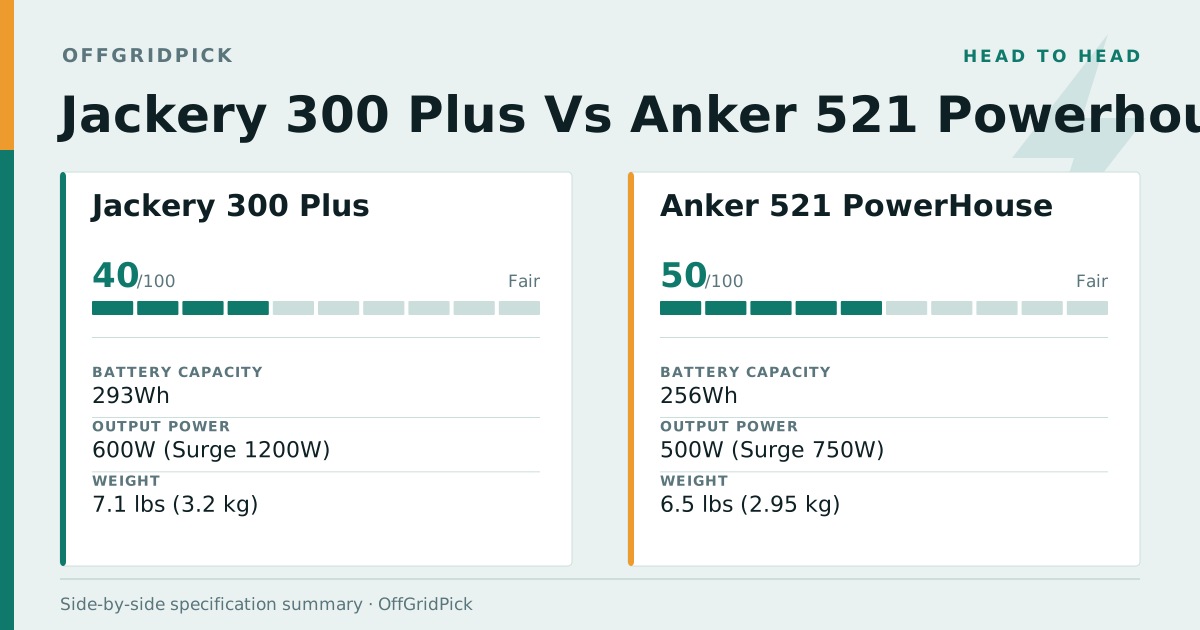
Anker 521 PowerHouse — 50/100 (Fair)
██████████░░░░░░░░░░
Jackery 300 Plus — 40/100 (Fair)
████████░░░░░░░░░░░░
Scores are calculated from publicly available specs including capacity, output, recharge speed, cycle life, and value. Learn about our methodology.
At a Glance
| Feature | Jackery 300 Plus | Anker 521 PowerHouse |
|---|---|---|
| Battery Capacity | 293Wh | 256Wh |
| Output Power | 600W (Surge 1200W) | 500W (Surge 750W) |
| Weight | 7.1 lbs (3.2 kg) | 6.5 lbs (2.95 kg) |
| Ports | 2 AC, 2 USB-A, 1 USB-C, 1 DC | 2 AC, 2 USB-A, 1 USB-C, 1 DC |
| Charging Time | 5-6 hours (AC), 4-5 hours (Solar) | 4-5 hours (AC), 3-4 hours (Solar) |
| Dimensions | 10.24 x 7.48 x 6.69 inches | 8.9 x 5.5 x 5.2 inches |
| Price Tier | Budget | Budget |
| Warranty | 24 months | 18 months |
Design & Build Quality
The Jackery 300 Plus feels like it could survive a camping trip with teenagers. The handle’s comfortable enough for lugging around, and the rugged casing shrugs off the occasional bump. It’s built for abuse, which I appreciate.
The Anker 521 PowerHouse takes a different approach—sleeker and more compact. At 6.5 pounds, it’s noticeably easier to carry than the Jackery. The materials feel premium without being precious. This one surprised me with how solid it feels despite being the lighter option. Units in this weight class dominate our small power stations for hiking roundup.
Performance
Here’s where things get interesting. The Jackery 300 Plus packs 293Wh and pushes out 600W continuously, with a 1200W surge that’ll handle power-hungry startup moments. Jackery’s Explorer 300 Plus product page has the full port breakdown and the LiFePO4 cycle rating. That’s enough for mini-fridges and coffee makers—perfect for the camp kitchen warriors.
The Anker 521 PowerHouse delivers 256Wh with 500W output and 750W surge. Sure, it’s less powerful on paper, but for most people charging phones, running laptops, and powering LED lights? It’s plenty. I’d skip this if you need to power bigger appliances, but for everyday electronics, the difference is barely noticeable.
Inverter Noise & Fan Behavior
Both units stay quiet enough that you won’t hate them at 2 AM. The Jackery has a slight hum under heavy loads—nothing dramatic, but it’s there. The Anker stays whisper-quiet even when working hard. Neither will disturb your sleep or ruin a peaceful campsite.
Battery Care & Longevity
Zero ongoing costs here—no filters, no fuss. These are sealed battery units that just work. Your biggest future expense might be battery replacement after years of use, but both are built to last. Solar charging can keep your electricity costs near zero if you’re into that.
Smart Features
Both units sport LCD displays that show the important stuff—battery level, power draw, charging status. The Jackery 300 Plus gives slightly more detailed info, which is handy if you’re a data nerd like me. The Anker 521 PowerHouse keeps things simple but shows everything you actually need.
Price & Value
Here’s where the Anker really shines. At a slightly lower price than the Jackery, you’re getting about 85% of the capacity. The math works out surprisingly well for the Anker, especially since most people never max out these units anyway.
Price Comparison Table
| Product | Price Tier | Capacity (Wh) | Output (W) | Weight (lbs) |
|---|---|---|---|---|
| Jackery 300 Plus | Budget | 293Wh | 600W | 7.1 |
| Anker 521 PowerHouse | Budget | 256Wh | 500W | 6.5 |
Who Should Buy Which?
Choose the Jackery 300 Plus if:
- You need that extra power headroom for appliances
- You’re running multiple devices simultaneously
- You want maximum ruggedness for outdoor adventures
Go with the Anker 521 PowerHouse if:
- You want the best bang for your buck
- Portability matters more than raw power
- Your needs are phones, laptops, and basic electronics
FAQ
How long does it take to charge the Jackery 300 Plus?
The Jackery 300 Plus charges via AC in 5-6 hours. Solar charging takes 4-5 hours with good sun conditions.
Can the Anker 521 PowerHouse charge a laptop?
Absolutely, as long as your laptop doesn’t exceed 500W (which most don’t).
Are these power stations safe to use indoors?
Yes, both have built-in safety features including short-circuit and overload protection — the behaviours UL 2743, the portable power pack standard, was written to test — and neither produces any exhaust.
What is the lifespan of the batteries in these power stations?
Expect around 500 charge cycles before noticeable degradation on older lithium-ion units—but both of these families have moved to LiFePO4, and Anker rates the current SOLIX C-series stations at several thousand cycles instead. That’s a decade of normal use rather than a few years.
Can I use solar panels with both power stations?
Yes, both accept solar panel charging, making them great for off-grid adventures.
Bottom line: The Jackery 300 Plus is the heavy hitter, but the Anker 521 PowerHouse delivers impressive value in a more portable package. Unless you absolutely need that extra power, the Anker’s hard to beat.