Best 500Wh Portable Power Station: Jackery vs EcoFlow vs Anker
Best 500Wh Portable Power Station: Jackery vs EcoFlow vs Anker vs Bluetti
The 500Wh class is the most sensible size most people never consider. It’s light enough to carry with one hand, big enough to run a weekend of camping electronics or an evening of blackout essentials, and every major brand — Jackery, EcoFlow, Anker, Bluetti — fields a contender here. This guide compares them on published specs so you can pick the right one for how you actually use power.
Quick Answer
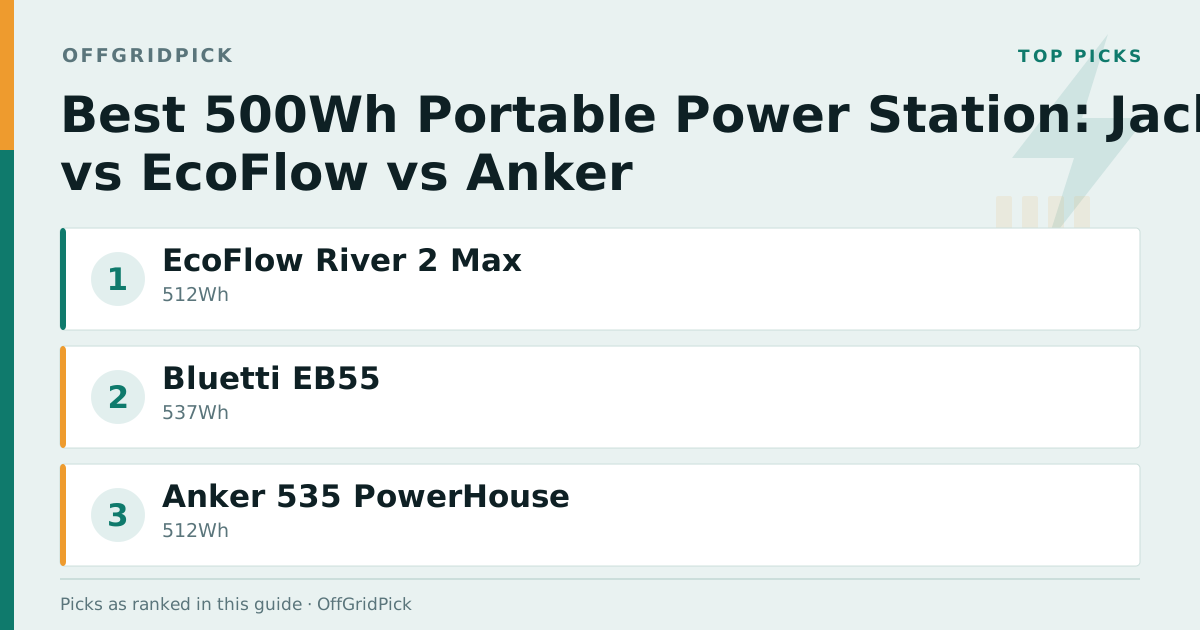
The EcoFlow River 2 Max is the best 500Wh portable power station for most people: 512Wh of LiFePO4 capacity, 500W output, a 100W USB-C port, and a full AC recharge in about an hour, all at roughly 13 lbs. The Bluetti EB55 is the pick if you need more output (700W) from the same class, and the Anker 535 PowerHouse is the durability-focused alternative with the same modern battery chemistry.
Quick Note: 500Wh vs 500W
These get mixed up constantly. Watt-hours (Wh) measure how much energy the battery stores — the fuel tank. Watts (W) measure how much power the station can deliver at once — the engine. This guide covers the ~500Wh capacity class; if you’re searching by output instead, our best 500-watt power station roundup sorts the field by inverter size.
The 500Wh Class Compared
| Model | Capacity | Chemistry | AC Output | AC Recharge | Weight | Rated Cycle Life |
|---|---|---|---|---|---|---|
| EcoFlow River 2 Max | 512Wh | LiFePO4 | 500W (X-Boost 1,000W) | About 1 hour | ~13.4 lbs | 3,000+ cycles |
| Bluetti EB55 | 537Wh | LiFePO4 | 700W (1,400W surge) | Several hours | ~16.5 lbs | 2,500+ cycles |
| Anker 535 PowerHouse | 512Wh | LiFePO4 | 500W | Several hours | ~16.8 lbs | 3,000+ cycles |
| Jackery Explorer 500 | 518Wh | Lithium-ion (NMC) | 500W (1,000W surge) | About 7.5 hours | ~13.3 lbs | ~500 cycles |
| Goal Zero Yeti 500X | 505Wh | Lithium-ion (NMC) | 300W (1,200W surge) | Several hours | ~12.9 lbs | ~500 cycles |
Detailed Breakdown
EcoFlow River 2 Max — Best Overall
The River 2 Max is what the 500Wh class looks like when it’s built on current technology. LiFePO4 cells rated for 3,000+ cycles, an AC recharge that finishes in about an hour, up to 220W of solar input, and a 100W USB-C port that fast-charges laptops without waking the inverter. At roughly 13.4 lbs it matches the lightest units here while carrying the most modern feature set.
Best for: Most buyers — campers, remote workers, blackout kits. There’s no meaningful category where it finishes last.
The main limitation is the 500W inverter. X-Boost stretches it to 1,000W for resistive loads like kettles, but motor-driven appliances should stay under the honest rating.
Bluetti EB55 — Best Output in the Class
The EB55 squeezes a 700W inverter (1,400W surge) into the 500Wh class, which meaningfully widens what you can plug in: more coffee gear, more tools, more small kitchen appliances that trip 500W units. It carries 537Wh — the most capacity in this group — plus a 15W wireless charging pad on top, a 100W USB-C port, and four AC outlets.
Best for: Anyone whose loads flirt with the 500W ceiling. The trade-offs are a few extra pounds and slower AC charging than the EcoFlow.
Anker 535 PowerHouse — Built to Last
Anker’s entry is the tank of the group: 512Wh of LiFePO4 rated for 3,000+ cycles, a unibody design, and Anker’s usual electronics polish. Output is a straightforward 500W across four AC outlets, plus USB-C and USB-A up front. It’s heavier than the EcoFlow and charges more slowly, but it’s the unit that feels most likely to survive a decade of truck-bed life. For how Anker’s smaller units compare, see our Jackery 300 Plus vs Anker 521 comparison.
Best for: Durability-first buyers and anyone already deep in the Anker ecosystem.
Jackery Explorer 500 — The Proven Veteran
The Explorer 500 built this category, and its core virtues — light weight, big handle, dead-simple operation — still hold. But its NMC battery is rated for roughly 500 cycles, it needs about 7.5 hours to recharge from a wall outlet, and there’s no USB-C anywhere on the unit. We put it head-to-head against EcoFlow’s current lineup in our Jackery Explorer 500 vs EcoFlow comparison.
Best for: Simplicity-first buyers, and value hunters when it drops a price tier below the LiFePO4 competition.
Goal Zero Yeti 500X — The Lightweight Outlier
The Yeti 500X is the lightest unit here at roughly 12.9 lbs, with clean design and solid build quality. The catch is the 300W inverter — the smallest in the group — and older NMC chemistry. It works well as a charging hub for devices, less well as a station for appliances.
Best for: Device-charging-focused users who prioritize every saved pound.
Check current availability: EcoFlow River 2 Max, Bluetti EB55, Anker 535 PowerHouse, Jackery Explorer 500.
What Can a 500Wh Station Actually Run?
Rough math from published capacity, assuming typical inverter efficiency:
- Phone (about 15Wh per charge): 25-30 charges
- Laptop (about 60Wh per charge): 7-8 charges
- 12V camping fridge (about 40W average): 10-12 hours
- CPAP without humidifier (about 40W): a full night with headroom
- LED camp lighting (10W): 40+ hours
What it won’t do: sustained kitchen duty. Kettles, induction burners, and space heaters belong a class or two up — our guide on what size power station you need covers the sizing math, and our 1000Wh roundup is the next step up.
FAQ
1. Is 500Wh enough for a weekend of camping? For phones, lights, cameras, laptops, and a compact fridge — yes, comfortably. Add a 100W-plus solar panel and this class becomes effectively self-sustaining for electronics on longer trips.
2. Why do cycle-life ratings differ so much in this class? Chemistry. LiFePO4 models (EcoFlow, Anker, Bluetti here) are rated for 2,500-3,000+ cycles; older NMC models (Jackery Explorer 500, Yeti 500X) for roughly 500. If you’ll use the station weekly, that gap dominates long-term value.
3. Which 500Wh station charges fastest? The EcoFlow River 2 Max, by a wide margin — about an hour from a wall outlet. Most of the class still takes several hours.
4. Can a 500Wh station power a full-size refrigerator? Briefly, but it’s the wrong tool — startup surges and daily energy needs point you at least to the 1,000Wh class. Our refrigerator guide runs the numbers.
5. Are these airline-safe? No. Airlines cap lithium batteries at 100Wh for carry-on (up to 160Wh with approval), and every station here is far beyond that. They travel by road only.
Conclusion
Buy the EcoFlow River 2 Max unless you have a specific reason not to — it’s the class leader on chemistry, charging, and weight at once. That specific reason is usually output, in which case the Bluetti EB55’s 700W inverter is worth the extra carry weight, or durability, where the Anker 535 makes its case. The veterans from Jackery and Goal Zero still function fine; they just ask you to accept last-generation batteries in a category where the modern options weigh the same.