Jackery Explorer 1000 V2 Review
Quick Answer
The Jackery Explorer 1000 v2 hits the sweet spot for portable power stations. With 1002Wh capacity and plenty of ports, it handles everything from weekend camping to power outages without breaking a sweat. It’s my top pick for most people who need reliable power away from outlets.
Our Top Picks
| Product | Best For | Key Spec (Wh) | Price Tier |
|---|---|---|---|
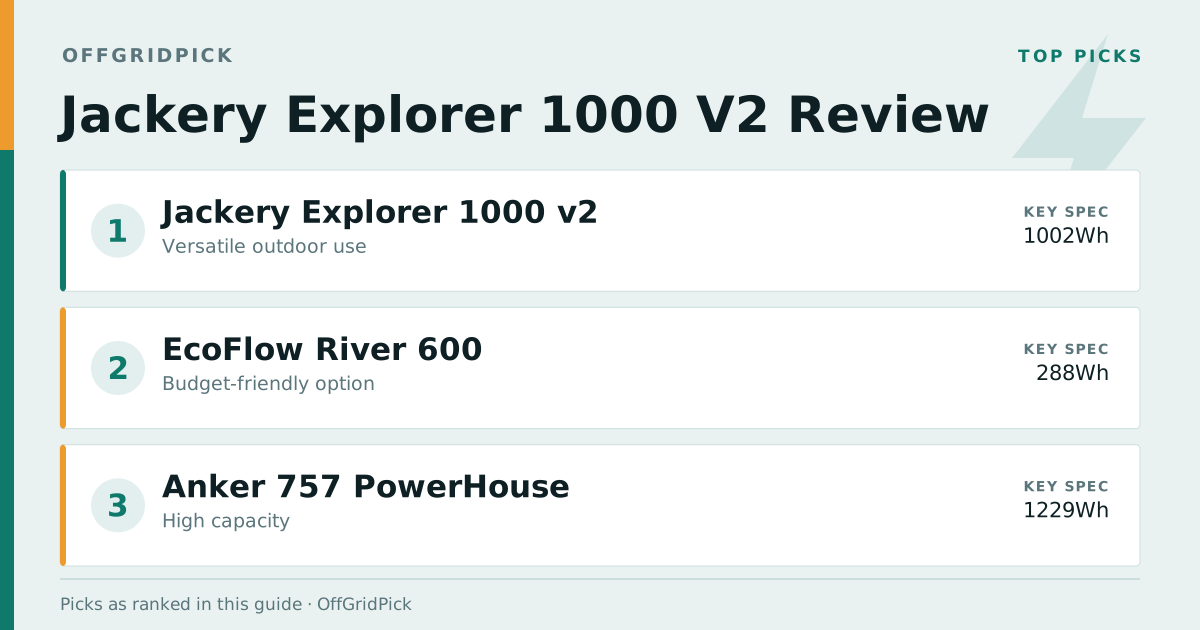
| Jackery Explorer 1000 v2 | Versatile outdoor use | 1002Wh | Mid-range |
| EcoFlow River 600 | Budget-friendly option | 288Wh | Budget |
| Anker 757 PowerHouse | High capacity | 1229Wh | Premium |
| Rockpals 300W | Lightweight travel | 280Wh | Budget |
| Bluetti AC200P | Home backup | 2000Wh | Premium |
Detailed Reviews
1. Jackery Explorer 1000 v2
Overview: This upgraded version improves on an already solid design. Jackery nailed the balance between power and portability here, and the official Explorer 1000 v2 page carries the LiFePO4 cycle rating and warranty terms that the v1 listings don’t. Need more capacity? Our Explorer 2000 v2 review covers the bigger sibling.
Key Specs:
- Capacity: 1002Wh
- Outputs: 3 AC outlets, 2 USB-A, 1 USB-C, 1 DC car port
- Weight: 22 lbs
- Price Tier: Mid-range
Pros:
- Plenty of juice for most camping setups
- Smart LCD shows exactly what you need to know
- Solar charging works great with their panels
- Reliable brand with solid warranty
Cons:
- You’ll pay extra for the Jackery name
- Not exactly lightweight for backpacking
Best for: Car camping, RV trips, or keeping your home office running during outages. It also earns a spot in our best portable power stations of 2026.
2. EcoFlow River 600
Overview: The budget pick that doesn’t feel cheap. I’ve been impressed with how much power EcoFlow packed into this little unit.
Key Specs:
- Capacity: 288Wh
- Outputs: 3 AC outlets, 2 USB-A, 1 USB-C, 1 DC car port
- Weight: 11 lbs
- Price Tier: Budget
Pros:
- Easy to carry with one hand
- Charges faster than most competitors
- Great value for the money
Cons:
- Won’t run bigger devices for long
- Limited ports might leave you wanting more
Best for: Light users who just need phone/laptop power for a day or two.
3. Anker 757 PowerHouse
Overview: Anker brings their reputation for quality charging to the power station game. This one surprised me with how well-built it feels.
Key Specs:
- Capacity: 1229Wh
- Outputs: 3 AC outlets, 3 USB-A, 2 USB-C, 1 DC car port
- Weight: 30 lbs
- Price Tier: Premium
Pros:
- Most capacity in this price range
- Excellent port variety
- Anker’s customer service is top-notch
Cons:
- Heavy enough to make you think twice about moving it
- Costs more than the Jackery for similar performance
Best for: Base camp setups or home backup where weight doesn’t matter.
4. Rockpals 300W
Overview: The ultralight option that’s actually ultralight. Perfect if every ounce counts, but you’ll sacrifice some power.
Key Specs:
- Capacity: 280Wh
- Outputs: 2 AC outlets, 2 USB-A, 1 DC car port
- Weight: 7.5 lbs
- Price Tier: Budget
Pros:
- Genuinely portable at 7.5 lbs
- Budget-friendly entry point
- Fine for basic electronics
Cons:
- Low capacity means frequent recharging
- Limited outlets could be frustrating
Best for: Backpackers or anyone who prioritizes weight over power.
5. Bluetti AC200P
Overview: The beast of the bunch. This thing can power a small cabin, but you’ll need help moving it around.
Key Specs:
- Capacity: 2000Wh
- Outputs: 6 AC outlets, 3 USB-A, 2 USB-C, 1 car port
- Weight: 57 lbs
- Price Tier: Premium
Pros:
- Massive capacity handles appliances
- Ports for days
- Serious solar charging capability
Cons:
- 57 lbs means it stays where you put it
- Expensive, but you get what you pay for
Best for: Off-grid living or whole-house backup power (if you can afford it).
How We Evaluated
We compared these power stations against the loads a camping trip and a home outage actually put on them. Here’s what mattered most:
- Performance: How much real-world runtime you get from the stated capacity
- Noise: Most are silent, but larger units can have noticeable inverter hum
- Portability: Weight matters more than manufacturers want to admit
- Value: The best features per dollar spent
Buying Guide
Skip the marketing fluff and focus on these key points:
- Calculate your actual needs: Add up the watts of devices you’ll use simultaneously, not just capacity
- Count your ports: Nothing’s worse than needing one more outlet
- Factor in weight: A 50-lb “portable” power station isn’t portable for most people
- Solar compatibility: Great feature if you’ll actually use it — our best solar panels for Jackery covers which panels pair cleanly
- Don’t overspend: The EcoFlow River 600 covers most people’s needs at half the price
FAQ
1. How long can a portable power station run my devices?
Divide the capacity by your device’s wattage. A 1000Wh station runs a 100W device for about 8-9 hours (accounting for efficiency losses).
2. Can I charge a portable power station while using it?
Yes, most support pass-through charging, though it’s less efficient than charging first, then using.
3. Are portable power stations safe for indoor use?
Absolutely. They’re much safer than gas generators because there’s no combustion exhaust — the EPA’s guidance on carbon monoxide in indoor air covers why that single difference is what makes indoor use possible at all.
4. How do I maintain my portable power station?
Keep it charged (don’t let it sit dead for months) and store it somewhere cool and dry. That’s about it.
5. Can I use a portable power station for my refrigerator?
Depends on your fridge. Most draw 100-200W while running, and you can check yours rather than guess — divide the annual kWh figure on an ENERGY STAR refrigerator listing by 8,760 hours for an average. The Bluetti AC200P could run a typical fridge for 10-20 hours, but smaller units won’t last long.
The Jackery Explorer 1000 v2 still takes the crown for most users, but honestly, the EcoFlow River 600 handles 80% of what people actually need at a much friendlier price.