Anker Solix C1000 Gen 2 vs Gen 1: What Actually Changed?
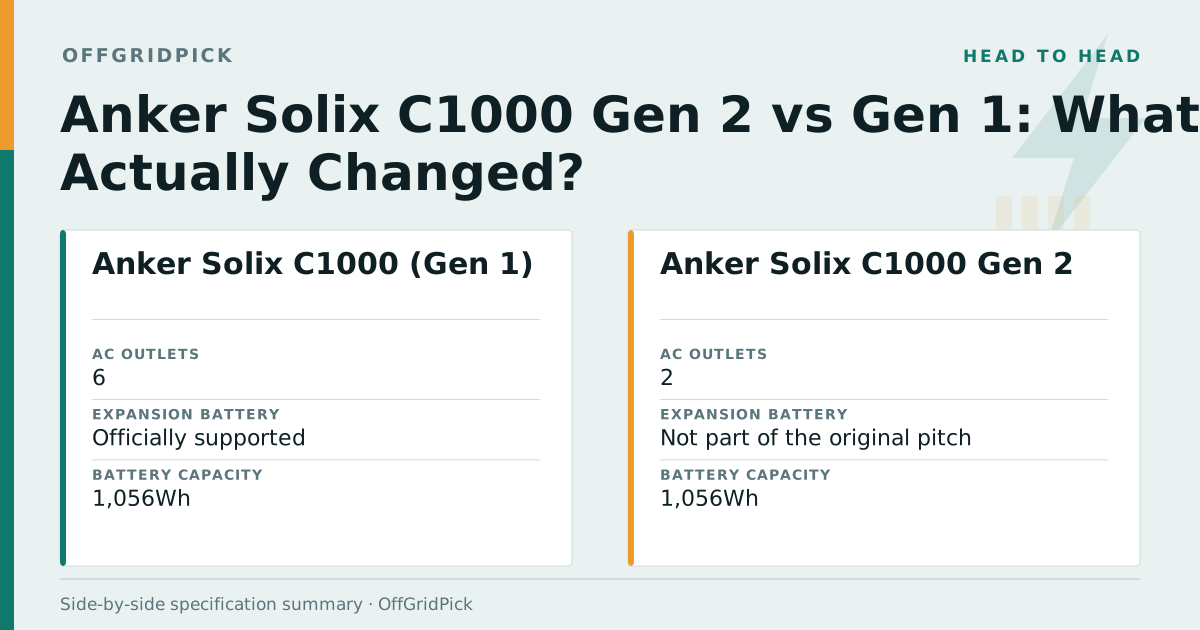
Anker Solix C1000 Gen 2 vs Gen 1: What Actually Changed?
Anker didn’t reinvent the C1000 when the Gen 2 arrived — and that’s exactly why this comparison confuses so many shoppers. The headline numbers are identical, so the real decision comes down to ports, design, and which generation lands in the better price tier at the moment you’re buying.
Quick Answer
The Anker Solix C1000 Gen 2 is not a straight reissue: Anker rates the original at 1,056Wh and the Gen 2 at 1,024Wh, and the newer unit is 3.5 lb lighter at 24.9 lb. Output is unchanged at 1,800W with 2,400W SurgePad, and both recharge about as fast. The Gen 2 is the more refined package with an updated design, while the Gen 1 counters with more AC outlets and official expansion-battery support — and since the Gen 2 launched, the original frequently slides into a lower price tier, which makes it the value pick when you can find it.
Spec Comparison
| Feature | Anker Solix C1000 (Gen 1) | Anker Solix C1000 Gen 2 |
|---|---|---|
| Battery Capacity | 1,056Wh | 1,024Wh |
| Battery Chemistry | LiFePO4 | LiFePO4 |
| Weight | 28.44 lb | 24.9 lb |
| AC Output | 1,800W continuous | 1,800W continuous |
| Surge Power | 2,400W (SurgePad) | 2,400W (SurgePad) |
| AC Recharge | Roughly an hour to full | Roughly an hour to full |
| AC Outlets | 6 | 2 |
| USB Ports | 2 USB-C, 2 USB-A | 2 USB-C, 2 USB-A |
| Car Outlet | 1 | 1 |
| Expansion Battery | Officially supported | Not part of the original pitch |
| Rated Cycle Life | 3,000+ cycles | 3,000+ cycles |
Both units are built around the same core idea: a compact 1kWh-class station that recharges fast enough to forget about. If you want the deeper dive on the newer model, our full Anker Solix C1000 Gen 2 review covers it section by section.
What Stayed the Same
The important stuff, honestly. Capacity moved slightly — 1,056Wh on the original, 1,024Wh on the Gen 2, a 3% difference you will never feel — and either comfortably covers a weekend of camping electronics or a day of essential-load home backup. Output is unchanged at 1,800W continuous, and Anker’s SurgePad trick still lets the unit absorb startup spikes up to 2,400W — enough to kick over most refrigerators, coffee makers, and power tools that would trip smaller stations.
Battery chemistry is the other constant. Both generations use LiFePO4 cells rated for 3,000+ charge cycles before dropping to 80% capacity — a figure Anker now quotes across its whole SOLIX range. In practice that’s close to a decade of regular use, and it’s the main reason neither generation feels disposable. If long cycle life is your top priority across brands, our LiFePO4 power station guide ranks the field.
Recharge speed also carries over. Anker made its name in this class with an AC recharge measured in minutes rather than hours, and both generations get from empty to full in roughly an hour from a wall outlet. That matters more than people expect: a station you can top off during lunch is one you’ll actually keep charged.
What Changed
Port layout. This is the biggest practical difference, and it cuts in the Gen 1’s favor. The original C1000 offers six AC outlets, which means you can plug in a camp kitchen, a couple of chargers, and a fan without reaching for a power strip. The Gen 2 streamlines down to two AC outlets alongside its two USB-C and two USB-A ports. Same total output, fewer sockets to spread it across.
Design. The Gen 2 is the cleaner, more modern-looking unit of the pair, and it feels less like industrial equipment sitting in a living room. If your station will live indoors as backup power between trips, that’s a genuine, if soft, advantage.
Expansion. Anker offers an official expansion battery for the original C1000 that roughly doubles total capacity, listed alongside the base unit on Anker’s C1000 product page. If you think your needs might grow toward multi-day backup, the Gen 1 ecosystem gives you that upgrade path today.
Price tier. We don’t chase day-to-day pricing here, but the pattern is familiar: once a Gen 2 launches, the Gen 1 tends to settle into a lower tier. At the same price the Gen 2 is the obvious pick; when the Gen 1 is discounted a full tier below, the value math flips.
You can check current availability for both: Anker Solix C1000 Gen 2 and the original Anker Solix C1000.
Which Generation Fits Your Use Case?
Camping and road trips: Either works, but the Gen 1’s six AC outlets are underrated at a busy campsite. One station, everyone’s gear plugged in, no adapters.
Home backup: The Gen 2’s cleaner design makes it the easier unit to keep parked near the router and fridge. If you want backup capacity that can grow, though, the Gen 1’s expansion support is the stronger long-term play. For bigger whole-room needs, step up a class — our 2000Wh roundup covers that territory.
Value hunting: Watch the Gen 1. Identical battery, identical output, more outlets — a lower price tier on the older unit is one of the better deals in the 1kWh class.
Brand comparison shopping: If you’re weighing Anker against the other big names at this capacity, our Anker Solix C1000 vs EcoFlow Delta 2 comparison and our Jackery vs Anker Solix breakdown cover the head-to-heads.
FAQ
1. Is the Anker Solix C1000 Gen 2 more powerful than the Gen 1? No. Both deliver 1,800W continuous output with 2,400W SurgePad surge capacity. The packs differ by 32Wh — 1,056Wh against 1,024Wh — which is about twenty minutes of laptop. The real differences are in weight, design and port layout.
2. Does the Gen 2 charge faster than the original C1000? Not meaningfully. Both generations recharge from a wall outlet in roughly an hour, which remains among the fastest in the 1kWh class.
3. Which one is better for camping? The Gen 1, slightly, because six AC outlets go further at a shared campsite. If you mostly charge USB devices, the Gen 2’s port mix covers you just as well.
4. Can I add an expansion battery to either model? The original C1000 officially supports Anker’s expansion battery, roughly doubling capacity. That upgrade path is the Gen 1’s clearest advantage for home-backup buyers.
5. Should I buy the Gen 1 now that the Gen 2 exists? If it’s sitting a price tier below the Gen 2, yes — you’re getting the same battery and output for less. If both are priced the same, take the newer design.
Conclusion
This is one of those rare generational updates where the older model doesn’t become the wrong answer. The Gen 2 is the nicer object; the Gen 1 is the more practical socket-strip and the better value when discounted. Pick based on outlets, expansion plans, and whichever lands in the lower tier this week — the battery inside is the same story either way. Still sizing up whether 1kWh is even the right class for you? Our guide on what size portable power station you need walks through the math.